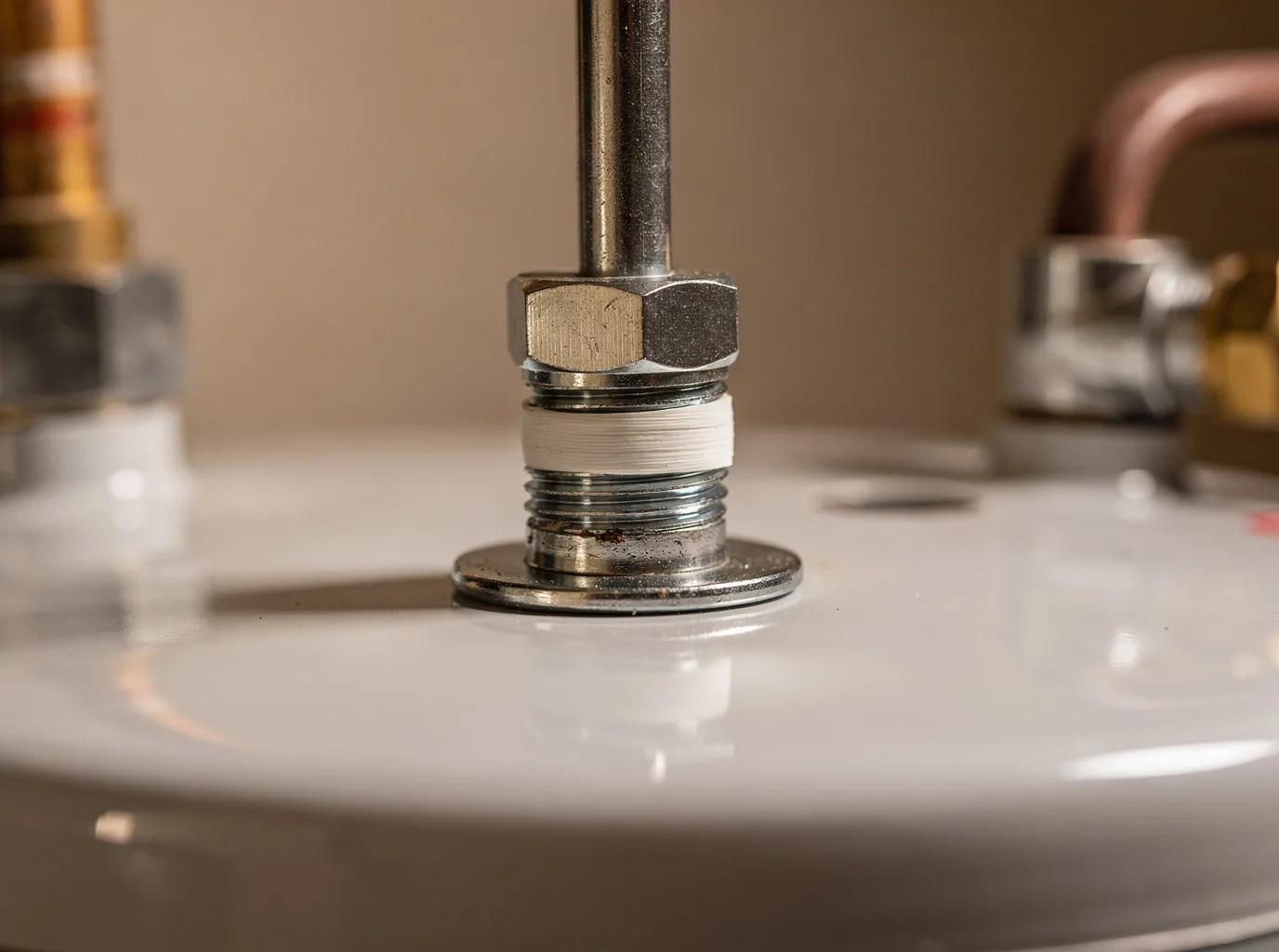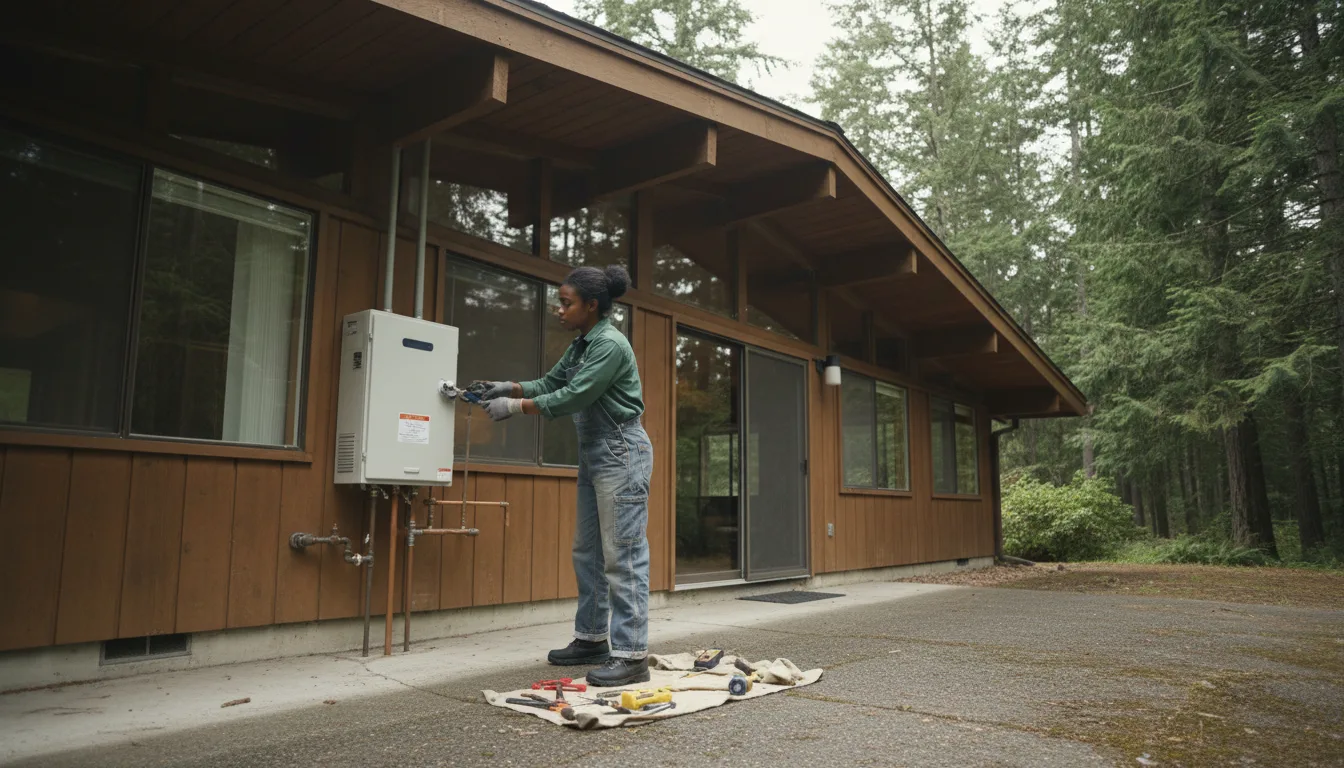
A heat pump water heater works like a refrigerator in reverse. It pulls heat from the air around it and moves that heat into the water, so it uses far less electricity than a standard electric tank of the same size.
Is it a good fit?
- Space. These tanks are taller than standard models and need open space above the tank for air intake.
- Air volume. Most makers ask for a fairly large room, or ducting or a louvered door if the closet is small.
- Room temperature. They run most efficiently in spaces that stay above about 40 degrees. Garages in warm climates and basements suit them well.
- Cooling effect. The unit cools and dries the room it sits in, which helps in a humid basement and is less welcome in a cold one.
- Condensate. It produces water that needs a drain or pump.
Operating modes
Most models have a heat pump only mode, a hybrid mode that adds the electric elements when demand runs high, and a high-demand setting for guests. Hybrid suits most families.
What affects cost
The tank costs more than a standard electric model, though utility rebates and federal tax credits often reduce it. Switching from gas may require a new 240-volt circuit. Moving the heater to a better spot adds labor.
When you call Sunvale Plumbing, describe where the current heater sits and how big that room is. The independent plumber in Java, SD confirms the fit and agrees the price with you first.