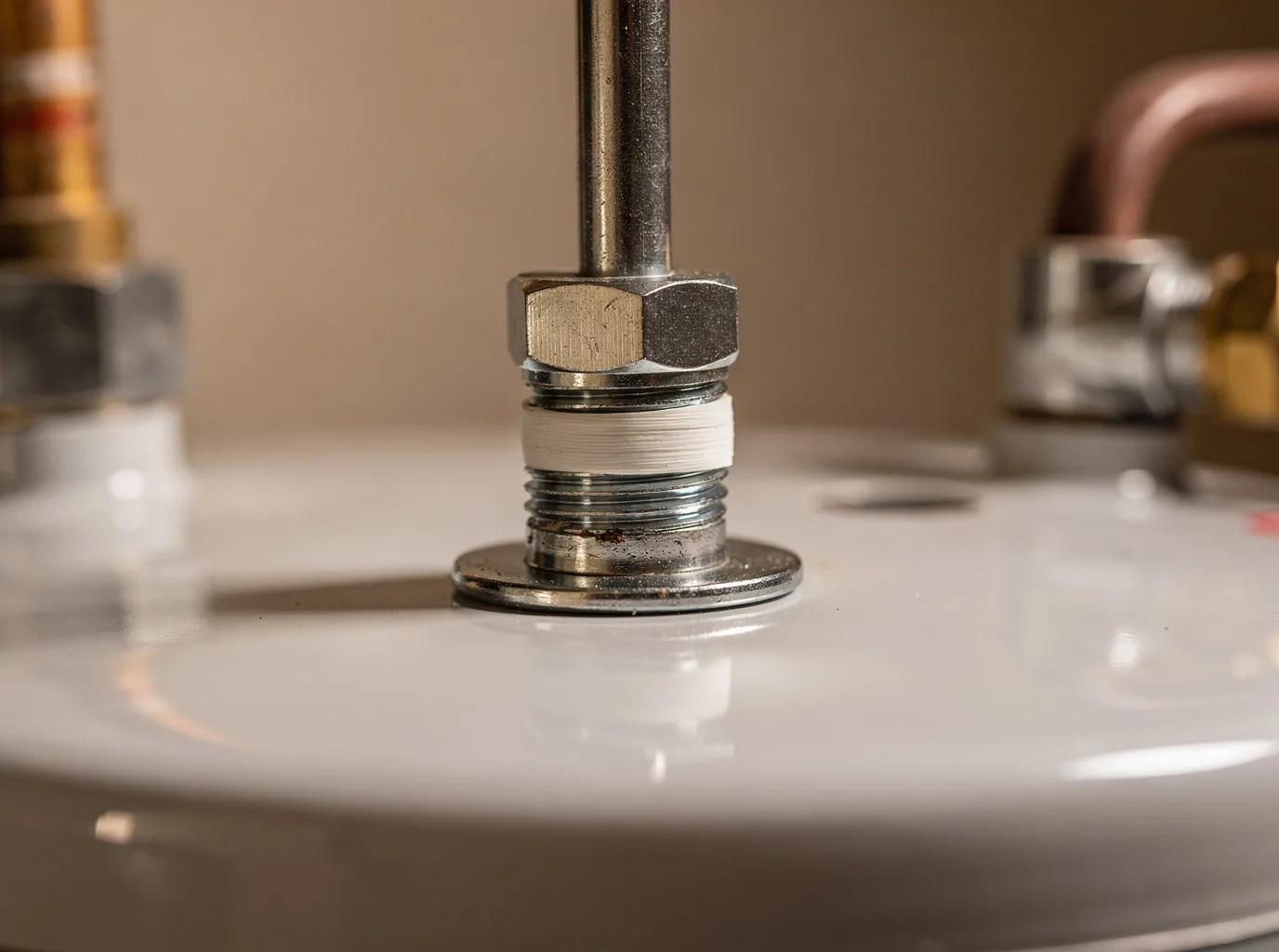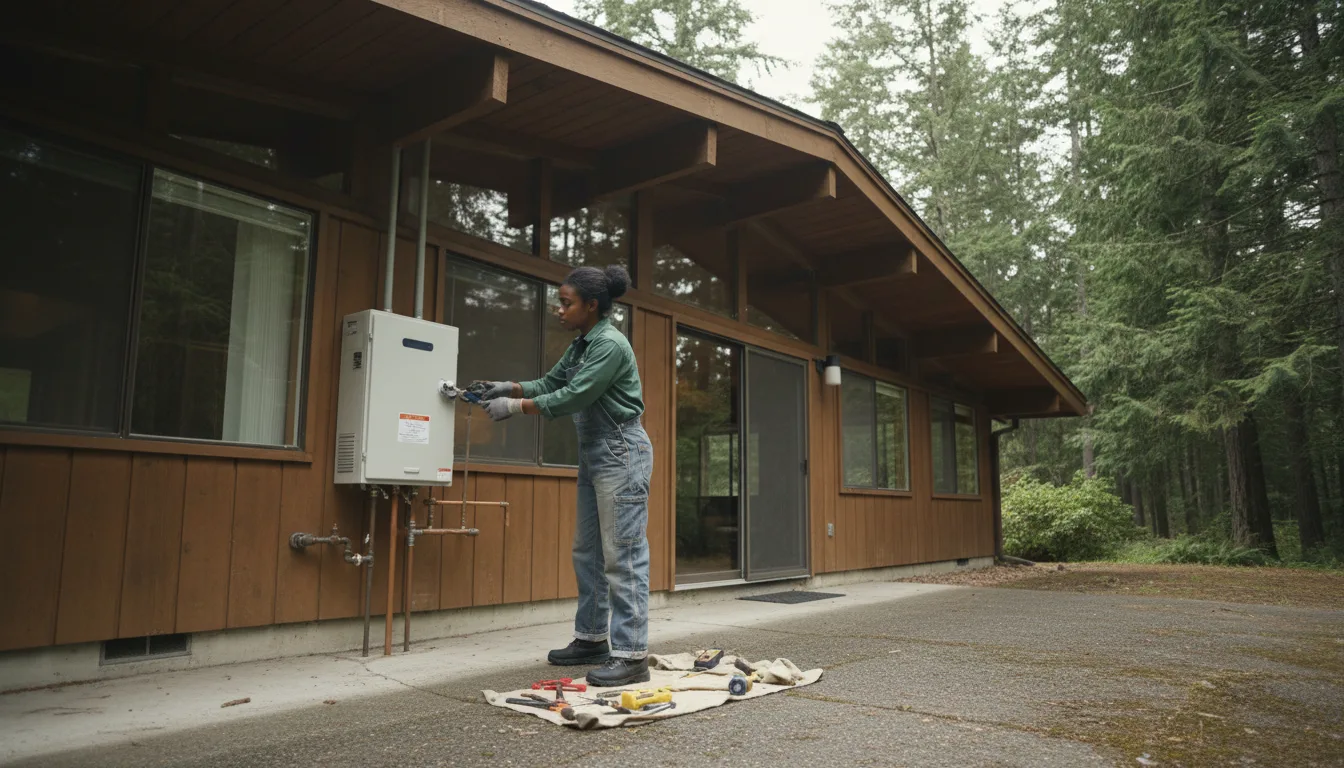
A gas water heater burns fuel, and the exhaust from that flame has to leave the house. On a standard tank it rises through a draft hood and a metal vent pipe into a chimney or a dedicated flue. Power-vent models use a fan to push it out through a side wall.
Warning signs
- Rust, scorch marks or melted plastic near the draft hood.
- Moisture or white crust on the vent pipe.
- A smell of exhaust in the room when the heater runs.
- A pilot that goes out on windy days.
- A carbon monoxide alarm sounding near the heater.
Common venting problems
Vent pipes need a steady upward slope and tight joints. Disconnected sections, sagging runs and too many elbows all slow the draft. Chimneys can be blocked by debris or bird nests. When a furnace is replaced with a high-efficiency model, the water heater can end up alone in a chimney that is now too large for it, and the exhaust cools and condenses inside. A chimney liner often fixes that. Power-vent units fail when the fan motor or pressure switch gives out.
Safety first
If a CO alarm sounds, get everyone outside and call the fire department or gas utility before anything else.
Booking a check
Sunvale Plumbing books an independent plumber in Java, SD who checks the draft, the vent joints and the chimney, then agrees the plan and price with you before repairs begin.