Water grows a little when it heats. In an open system that extra volume pushes back into the city main. Once a home has a check valve or pressure regulator on the incoming line, the system becomes closed, and that extra water has nowhere to go.
What a closed system does to your heater
Each heating cycle spikes the pressure in the house. You may notice the relief valve dripping after a long shower, faucets that spit when first opened, or toilet fill valves that wear out early. Over time those pressure swings strain the tank seams and the fittings on every fixture.
How the expansion tank helps
An expansion tank is a small steel tank with an air cushion behind a rubber bladder. As the water heats, the extra volume pushes into the tank and squeezes the air instead of raising the house pressure. Many local codes now require one whenever a water heater is replaced on a closed system.
Getting the size and setting right
- The tank is sized by water heater volume and incoming pressure.
- Its air charge is set to match the house water pressure before it is installed.
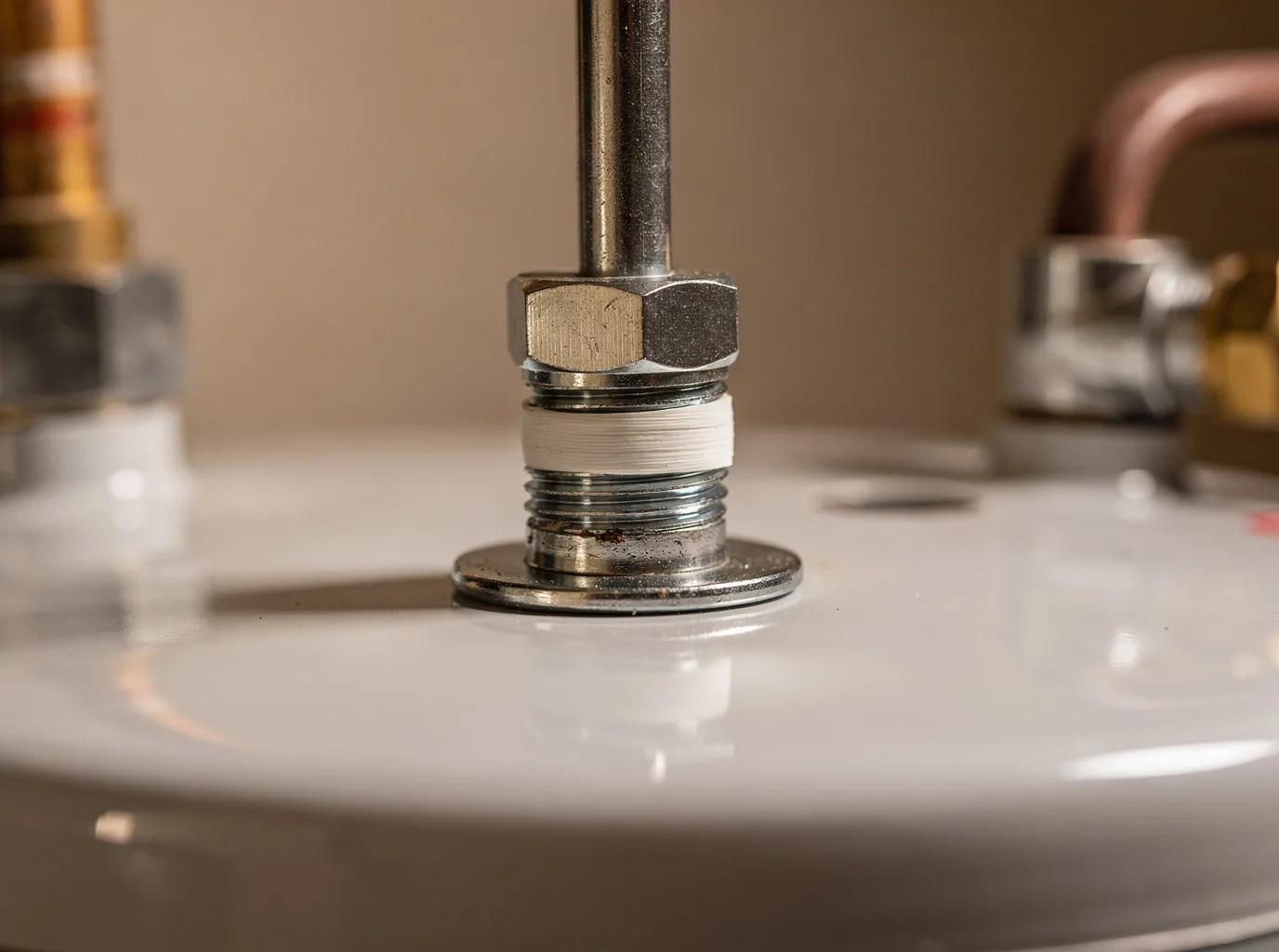
- It mounts on the cold supply near the heater and needs support so its weight does not hang on the pipe.
A tank that was never set to house pressure, or one with a torn bladder, does little. If you tap one and it sounds full of water all the way up, it may need replacing.
When you book through Sunvale Plumbing, tell us your heater size and whether you have a pressure regulator. The independent plumber in Java, SD confirms the plan and price first.